
By History by Candlelight
In the soft glow of Tudor candlelight, Anne Boleyn stands as one of history’s most captivating figures — a woman whose brilliance, courage, and tragedy shaped the course of England forever. She is often remembered through the sharp edges of her downfall, yet behind the stories was a woman of intelligence, faith, and fierce determination.
Today, we step gently into her world.
A Childhood Across Courts
Anne Boleyn’s early years were spent not in England, but in the refined courts of Burgundy and France. There, she learned languages, music, dance, diplomacy, and the subtle art of courtly grace. These experiences shaped her into a woman unlike any other at Henry VIII’s court — confident, educated, and quietly magnetic.
She returned to England not as a simple court lady, but as someone who carried the elegance of Europe in her step.
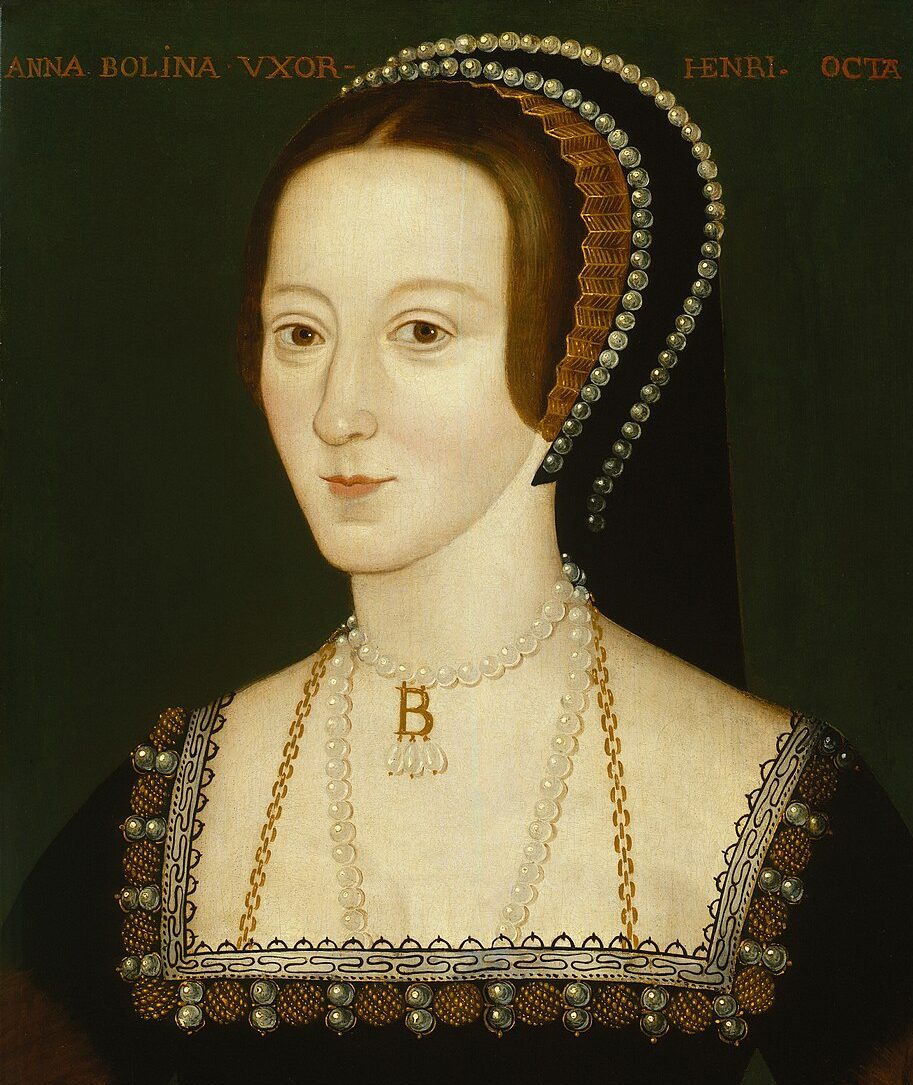
Anne Boleyn, the second wife of Henry VIII
A Captivating Presence
Anne’s charm was not rooted in beauty alone. Contemporary accounts describe her as witty, sharp, and deeply charismatic. She spoke boldly, laughed easily, and carried herself with a confidence that drew attention long before Henry VIII noticed her.
She refused to become the king’s mistress — a decision that changed everything. Her courage to say “no” reshaped the future of a kingdom.
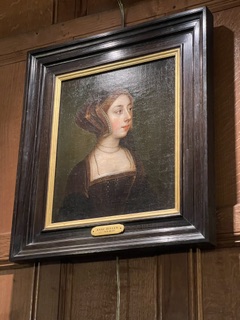
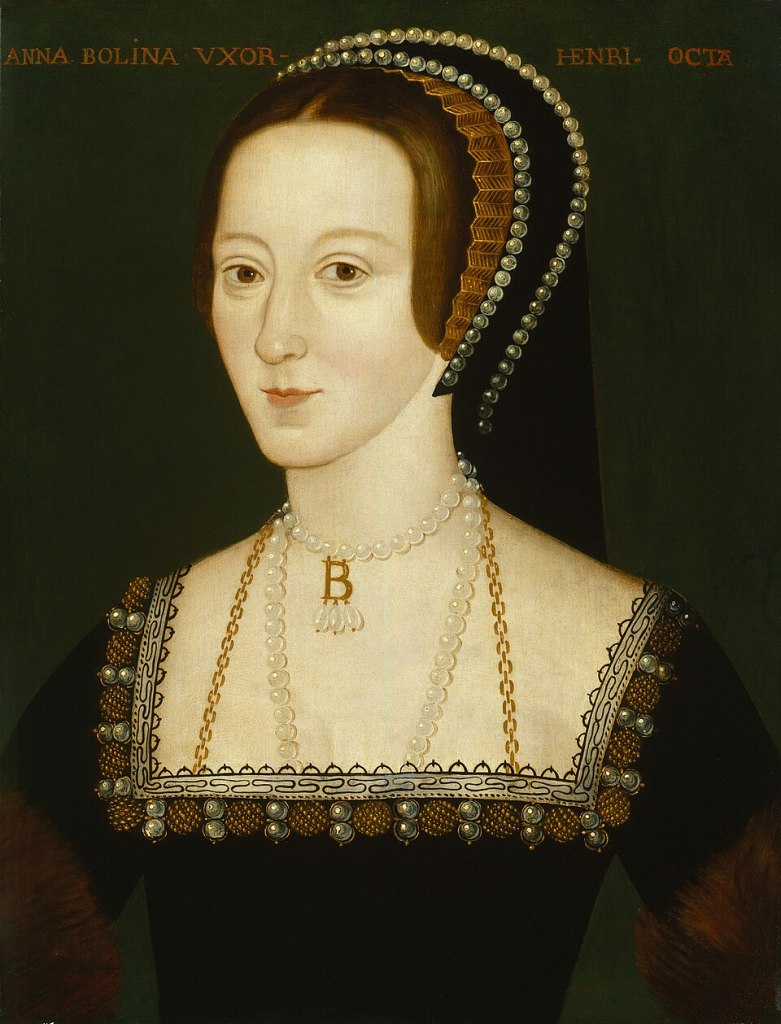
Photo 1. Anne Boleyn at Hever Castle — a moment from my visit, captured during the exhibition honouring her life.
Photo 2. Anne Boleyn — a later portrait traditionally associated with her likeness.
The King’s Great Matter
Henry VIII’s pursuit of Anne sparked one of the most dramatic political and religious shifts in English history. His desire to marry her led to the break with Rome, the English Reformation, and the creation of the Church of England.
Anne became queen in 1533, crowned with splendour and hope. But the crown she wore was heavy.
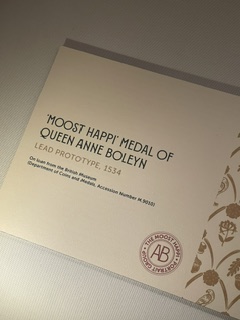

Photo 1. Anne Boleyn’s ‘Moost Happi’ medal — a rare Tudor piece celebrating her queenship, displayed at Hever Castle.
A Queen of Influence
Anne was not a silent queen. She advocated for religious reform, supported scholars, and used her influence to help those she believed deserved mercy or advancement. She was passionate, opinionated, and unafraid to speak — qualities admired by some and feared by others.
Her daughter, Elizabeth, would one day become one of England’s greatest monarchs. Anne never lived to see it.
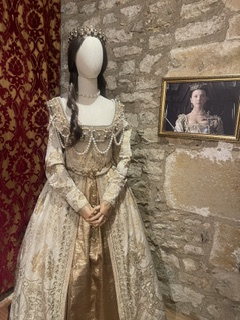
Photo 1. The coronation gown worn by Natalie Dormer as Anne Boleyn in The Tudors, displayed at Hever Castle.
The Fall
By 1536, the political winds had turned. Anne’s enemies were powerful, and Henry’s affections had shifted. Accusations of adultery, treason, and conspiracy were brought against her — charges widely believed by historians to be false or manipulated.
Anne faced her trial with dignity, speaking with clarity and courage. On 19 May 1536, she was executed within the Tower of London.
Her final words were gentle, forgiving, and full of faith.

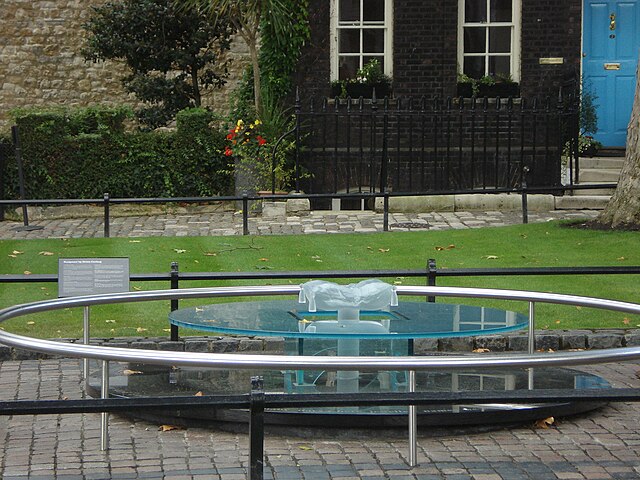
Photo 1. Traitors’ Gate at the Tower of London — the riverside entrance through which Anne Boleyn was brought to her imprisonment in 1536.
Photo 2. The memorial at Tower Green — marking the spot where Anne Boleyn was executed in 1536.
Remembering Anne Boleyn Gently
Anne Boleyn was not simply a tragic queen. She was a woman of intelligence, conviction, and remarkable strength. She changed England’s history, shaped its future, and left a legacy that still glows softly through the centuries.
In the candlelight, her story becomes more than a fall — it becomes a reminder of the power of courage, the cost of ambition, and the humanity behind the crown.
Closing Reflection Question
When you think of Anne Boleyn, what part of her story stays with you the most — her courage, her influence, or her quiet final moments?


Leave a comment