
History by Candlelight — written for young Tudor learners
A lady‑in‑waiting was one of the most important women in the Tudor court. She served the queen directly, helped with daily tasks, and stayed close to her throughout the day. Although her life looked glamorous from the outside, it was full of responsibility, rules, and careful behaviour.
Here’s what her day really looked like in Tudor times.
🕯️ Morning: Preparing the Queen’s Day
Lady‑in‑waiting duties began early. She woke before most of the court and dressed in fine but practical clothing — layers of linen, silk, and velvet. Her outfit showed her status, but it also needed to be comfortable enough for long hours of work.
In the morning she helped:
- prepare the queen’s chamber
- lay out clothing and jewellery
- organise washing water and towels
- assist the queen in dressing
This was a trusted role. Only a small group of women were allowed this close to the queen.
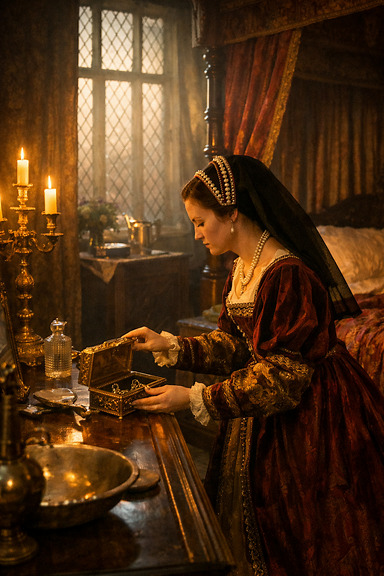
Ai image The lady‑in‑waiting arranging the Queen’s jewellery box
👑 Serving Beside the Queen
Throughout the day, the lady‑in‑waiting stayed near the queen during:
- audiences
- meals
- walks
- public events
She offered small but important help, such as:
- carrying letters
- providing handkerchiefs
- passing messages
- supporting the queen during long ceremonies
She needed excellent manners, calm behaviour, and the ability to stay quiet even when she noticed court drama unfolding around her.

Ai image Her lady‑in‑waiting follows respectfully, dressed in muted teal with a French hood, holding a folded letter.
✒️ Daily Tasks and Skills
A lady‑in‑waiting was expected to be well‑educated and skilled. Her tasks often included:
- writing letters
- reading aloud
- practising music
- embroidery
- helping organise events
These activities weren’t hobbies — they were part of her job. Tudor queens relied on their ladies to help with communication, entertainment, and the smooth running of the household.

Ai image Letters, music, and embroidery — a lady‑in‑waiting’s day was filled with quiet skill and grace. Every stitch and word reflected loyalty to the queen and pride in her craft.
💬 Court Life: Friends, Gossip & Caution
Ladies‑in‑waiting spent a lot of time together, so friendships naturally formed. They shared:
- conversations
- jokes
- worries
- small moments of fun
But court life could be risky. A careless comment could become a rumour, and rumours could cause real trouble. So Tudor ladies learned to:
- listen more than they spoke
- avoid repeating gossip
- stay loyal to the queen above all else
This helped them stay safe in a court full of politics and competition.

Ai image Friendship at court was precious — but every word mattered. A lady‑in‑waiting learned to listen carefully, speak softly, and guard her loyalty to the queen.
🕊️ Faith and Quiet Moments
Religion was a major part of Tudor life. A lady‑in‑waiting often paused during the day to:
- pray
- read a psalm
- visit the chapel
- reflect quietly
Faith helped her stay calm in a busy and sometimes stressful environment. Many Tudor women carried small prayer books or rosaries to guide their devotion.

Ai image Even in a busy palace, Tudor women found quiet moments to pray, reflect, and steady their hearts.
🌙 Evening: Music, Feasts & Rest
Evenings at court were lively. There were:
- feasts
- dancing
- music
- games
- performances
The lady‑in‑waiting attended these events with the queen, ready to help if needed.
At the end of the night, she returned to her own chamber. She might write a short note about the day, tidy her belongings, or read before sleeping. Her duties would begin again early the next morning.

Ai image Evenings at the palace were filled with music, feasting, and soft candlelight — a peaceful end to a busy Tudor day.
🪶 Why Ladies‑in‑Waiting Mattered
Ladies‑in‑waiting were essential to the Tudor court. They:
- supported the queen
- represented noble families
- kept the royal household running smoothly
- acted as companions, assistants, and trusted helpers
Their work required intelligence, patience, loyalty, and grace — qualities admired throughout Tudor England.
🌙 Closing Paragraph
A lady‑in‑waiting played a vital role in the Tudor court. Her day was filled with responsibility, skill, and careful behaviour, all carried out in service to the queen. Although she lived close to power, her life required patience, loyalty, and constant awareness of the world around her. Through her work, she helped keep the royal household running smoothly and showed the importance of grace, intelligence, and dedication in Tudor England.
❓If you lived in Tudor times, would you want to be a lady‑in‑waiting — and which part of her day do you think you’d enjoy the most?
 History by Candlelight
Leave a comment