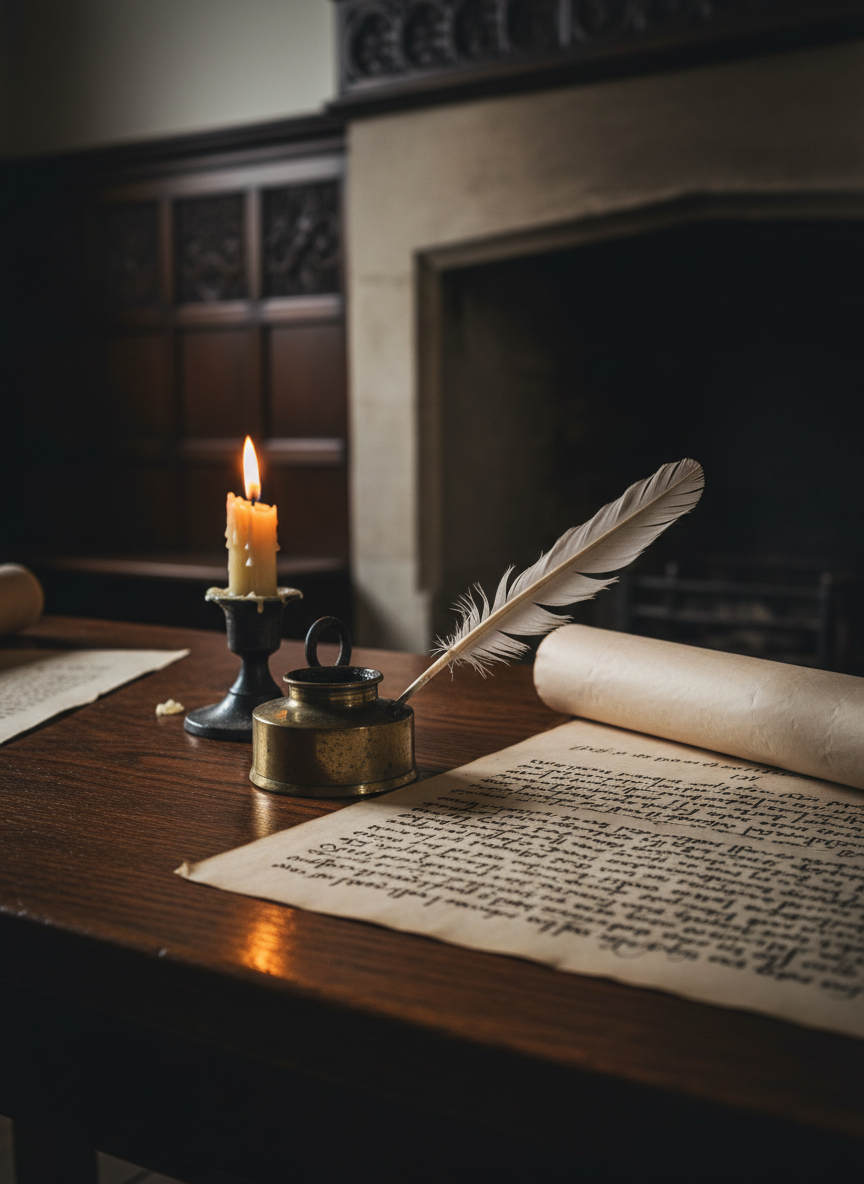
Life at the Tudor court was a world of glittering ceremony, whispered alliances, and carefully practised manners. It was a place where music drifted through long corridors, where silks rustled as courtiers passed, and where every gesture – every bow, every word – mattered. To be at court was to live close to the heart of power, under the watchful eyes of the king and queen.
What was the Tudor Court?
- Not a single building – but a travelling household
- Hundreds of people: nobles, servants, musicians, guards, clerks
- A place of politics, entertainment, and ceremony
- The centre of royal life, decision-making, and display
It was a moving world that followed the monarch from palace to palace. When the king went on progress, he didn’t travel with a small group – he brought an entire world with him. A Tudor royal progress was like a moving village, full of colour, noise, and constant activity. The court didn’t just visit the countryside…it arrived in it.
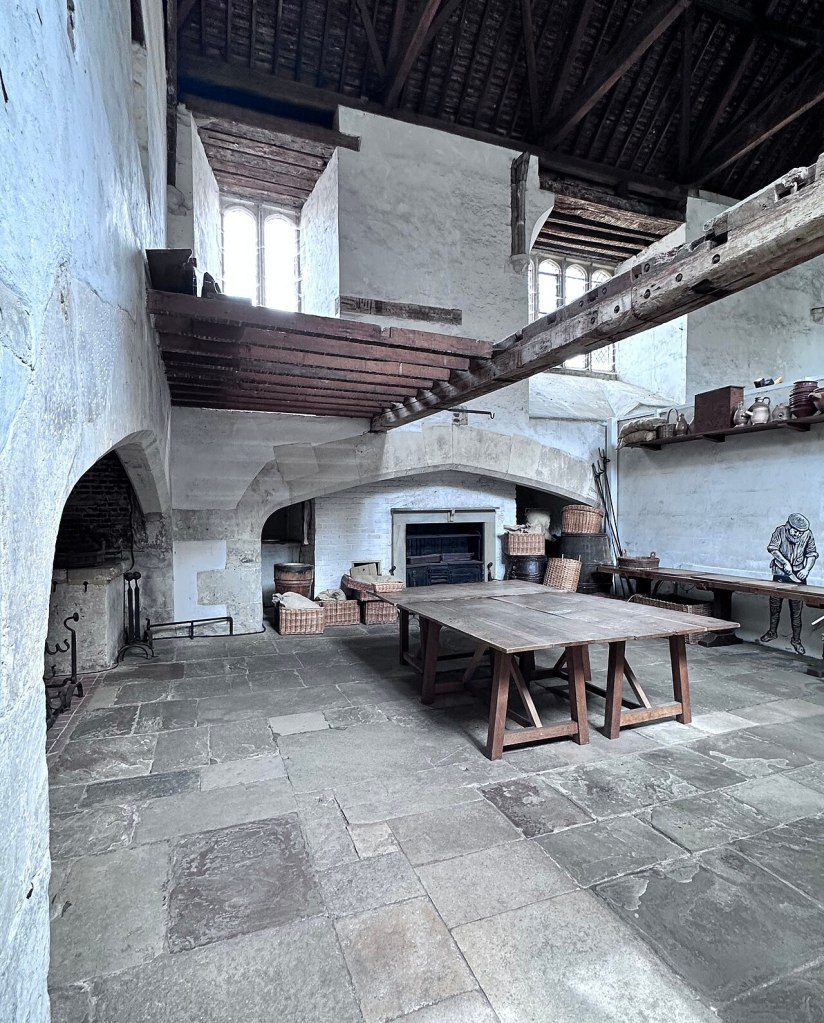
Tudor kitchen at Hampton Court Palace, where meals for hundreds were prepared each day.
“Tudor kitchen, Hampton Court Palace” by APK, 16 May 2026. Licensed under CC BY 4.0.Link to licence:https://creativecommons.org/licenses/by/4.0/
Who Lived and Worked at the Tudor Court?
👑Courtiers
These were nobles who lived close to the king or queen. They attended events, offered advice, and tried to win favour. Their main “job” was to be seen, be polite, and stay in the king’s good books.
👗Ladies-in-Waiting
These were noblewomen who served the queen. They helped her dress, kept her company, carried messages, and were part of her inner circle. They saw everything – and heard even more.
🗝️Gentlemen of the Privy Chamber
These were trusted men who served the king in his private rooms. They helped him dress, played cards with him, travelled with him, and had close access – which made them very powerful.
✒️Scribes & Clerks
They handled letters, accounts, and official documents. They wrote constantly – recording decisions, copying orders, and keeping the machinery of the court running smoothly.
🎻Musicians & Singers
Music filled the Tudor court. These performers played during meals, dances, ceremonies, and celebrations. Henry VIII especially loved music, so musicians were highly valued.
🍗Cooks & Kitchen Staff
A huge team worked in the royal kitchens. They prepared feasts, baked bread, roasted meat, and managed supplies for hundreds of people every day. The kitchens were noisy, hot, and incredibly busy.
🧺Laundresses
Laundresses were some of the hardest-working women in the Tudor court, yet they rarely appear in portraits or stories. Their work was essential – without them, the court simply couldn’t function.
🛡️Messengers & Heralds
The court was a place of constant communication. Messengers carried letters across the palace and delivered news to nobles. They also travelled long distances with royal orders. Heralds announced important events, proclamations, and arrivals – their voices carrying authority.
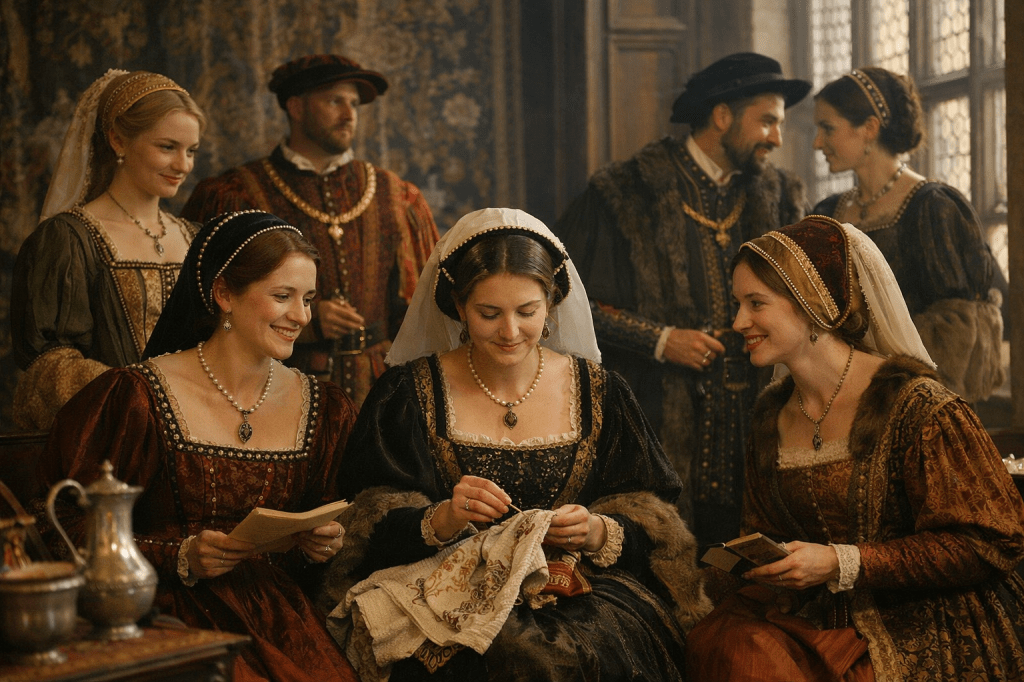
An AI‑created glimpse into the queen’s world — ladies‑in‑waiting at work and courtiers watching from the shadows.
A Court on the Move
A typical travelling court included around 400 to 600 people. These were the everyday courtiers, servants, guards, cooks, stable workers, and officials who followed the king wherever he went. Even at its smallest, the court was enormous – a long line of horses, carts, and people stretching across the road.
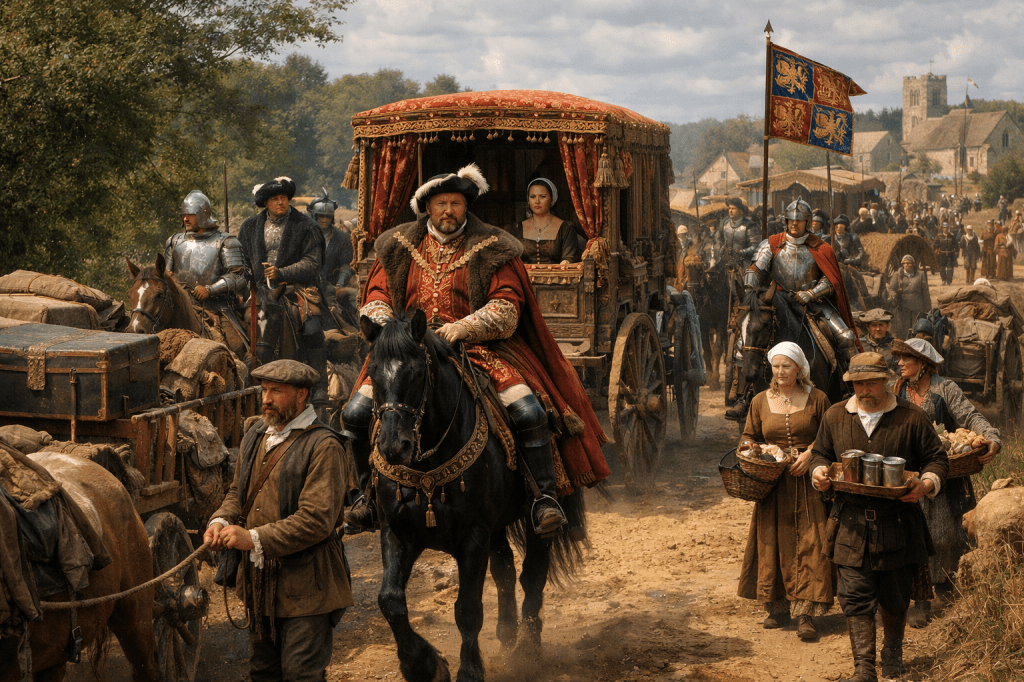
Ai-generated interpretation of a Tudor royal progress – Henry VIII and his court travelling through the countryside, a moving village of colour, ceremony, and life.
Grander Progresses
For special occasions or important visits, the numbers grew even larger. The court could swell to 800 or even 1,000 people, especially when nobles joined the journey with their own households. Extra guards, musicians, entertainers, and craftsmen travelled too, turning the progress into a spectacular moving display of Tudor power.
Henry VIII at His Most Magnificent
Henry VIII loved to impress. On some of his grandest progresses, he travelled with over 1,500 people. These journeys included:
- Carts filled with tapestries, beds, and tableware
- Hunting dogs and falcons
- Entire kitchen teams
- Armourers and craftsmen
- Musicians and performers
- And hundreds of horses
It was like transporting a palace across the countryside – a living, breathing symbol of royal authority.
A Living Village
Wherever the court stopped, the quiet of the countryside was replaced by the sounds of:
- Horses being watered
- Cooks preparing meals
- Servants unloading carts
- Musicians practising
- Guards calling orders
- And courtiers gathering to catch the king’s eye
For ordinary people, seeing the court arrive was unforgettable – a rare moment when the splendour of royalty passed right by their door.
Why the Tudors Travelled: The Purpose behind a Progress
A royal progress wasn’t just a pleasant journey through the countryside – it was a powerful tool. Every mile the king travelled carried meaning.
Showing Royal Power
Most people in Tudor England would never see the king in their lifetime. A progress changed that.
When Henry VIII rode through a town surrounded by glittering courtiers, guards, banners, and music, it reminded everyone who ruled the land.
Strengthening Loyalty
By visiting nobles in their own homes, the king reinforced bonds of loyalty.
A well-hosted visit could bring favour.
A poorly hosted one could be remembered for years.
Escaping Plague and Heat
London was crowed – and dangerous in summer. Progresses allowed the court to escape outbreaks of plague and the stifling heat of the city.
Inspecting the Kingdom
Travelling allowed the king to see:
- The state of roads
- The condition of towns
- The loyalty of nobles
- The prosperity (or poverty) of the countryside
It was a way of ruling by presence.
A World of Movement, Power, and Human Stories
Whether settled in a grand palace or travelling across the countryside like a moving village, the Tudor court was never still. It was a world built on ceremony and splendour, but also on the everyday work of hundreds of people whose names history rarely remembers. Every progress, every feast, every whispered conversation in a candlelit corridor was shaped by the hands, hopes, and hard work of those who lived and laboured behind the scenes.
For the people who watched the court pass by – villagers standing at their doors, children craning for a glimpse of the king, families offering gifts of bread or ale – it was a moment they would never forget. For those within the court, it was life itself: dazzling, dangerous, exhausting, and full of possibility.
The Tudor court was more than a place. It was a living world – glittering, noisy, ambitious, and deeply human.
💬If you could step into the Tudor court for just one moment – would you choose the quiet warmth of the queen’s chambers, the lively bustle of the Great Hall, or the breathtaking spectacle of a royal progress passing through the countryside?


Leave a comment