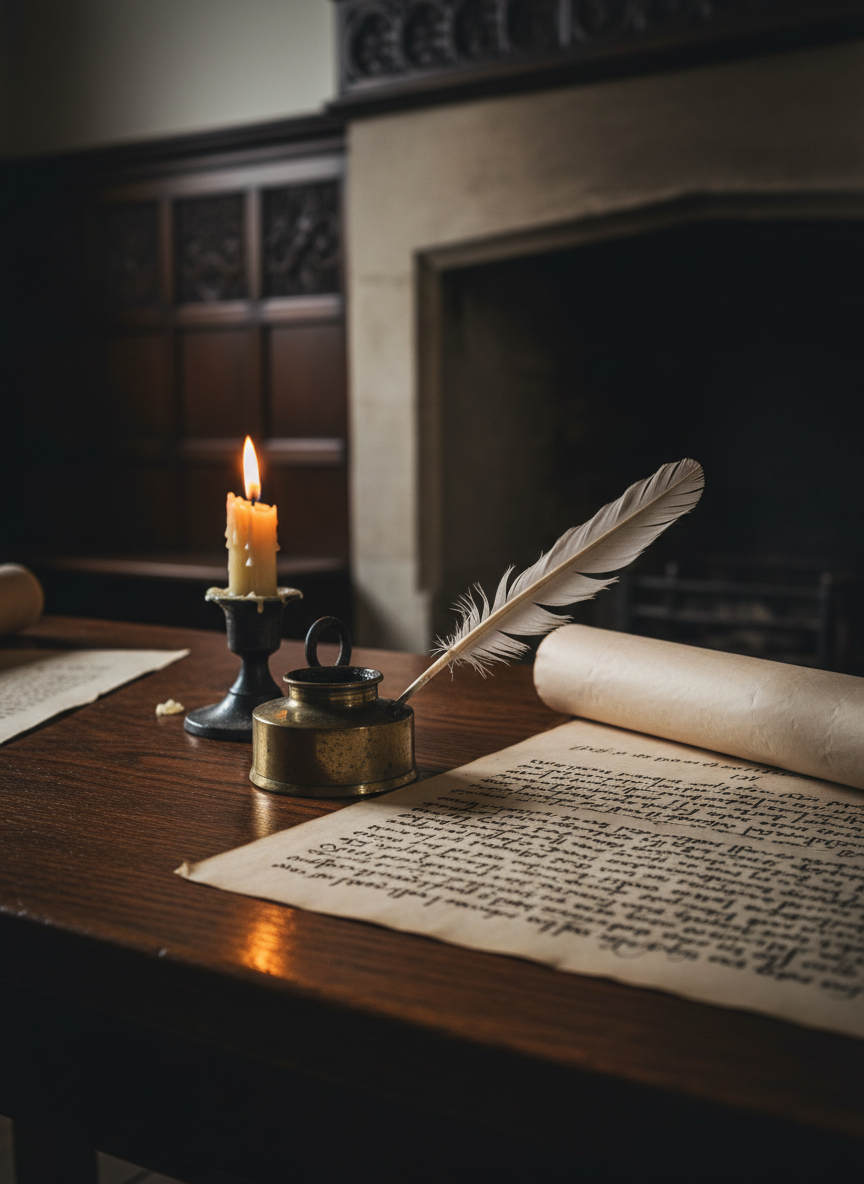
A gentle, candlelit journey through Tudor kitchens, tables, and tastes
In Tudor England, food was more than something to eat – it was a quiet story about who you were. A poor family might gather around a single pot of bubbling pottage, sharing wooden spoons and eating quickly before work began.
Meanwhile, in a grand manor house, servants carried trays of sweetened porridge, soft white bread, and warm meats to a long table lit by candles, what you ate, how much you had, and even where you sat depended entirely on the world you were born into. Today, we’ll wander gently through Tudor kitchens to see how different life looked for the rich and the poor.
Breakfast: Two Very Different Mornings
Poor Tudor Families
For poor families, breakfast was simple and practical. Most mornings began with pottage, a thick mixture of oaks, peas, or barley cooked slowly with whatever vegetables were available. It wasn’t exciting, but it was warm and filling.
Bread was dark and heavy because it was made from cheaper grains like rye or barley. Children often ate standing or perched on stools, sharing from the same bowl. There was no sugar, no butter, and no luxury – just enough to keep hunger away before a long day of work in the fields or workshops.
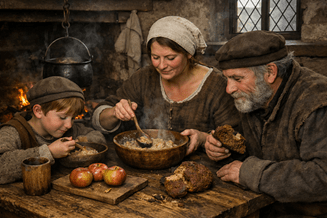
A poor Tudor family begins the day with pottage and coarse bread – a simple meal shared by the fire. This image is an artistic AI interpretation.
Rich Tudor Families
Wealthy families enjoyed a much gentler start to the day. Their breakfast might include soft white manchet bread, sweetened porridge, cheese, and sometimes slices of cold meat. Because sugar was expensive, only the rich could afford to add it to their food, making their meals sweeter and more enjoyable. Breakfast was served in warm rooms with tapestries on the walls, and servants brought dishes to the table. Rich children were taught manners from the moment they could hold a spoon – sit straight, speak softly, and never reach across the table.
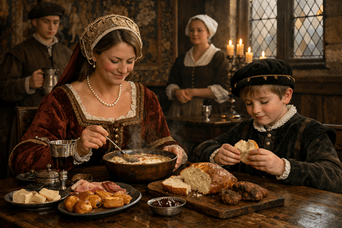
Morning in a Tudor manor: soft white bread, cheese, and sweetened porridge served beneath candlelight. This image is an artistic AI interpretation.
Dinner: The Main Meal of the Day
Poor Tudor Families
Dinner was the biggest meal for everyone, but poor families had far fewer choices. Their meals were built around vegetables, bread, and pottage. Meat was rare and usually saved for holidays. Instead, they ate onions, beans, cabbage, leeks, and whatever they could grow or buy cheaply. Everything was cooked over an open fire, and the whole family shared from one pot.
Children learned early that nothing could be wasted – yesterday’s pottage was eaten again today, sometimes for several days in a row.
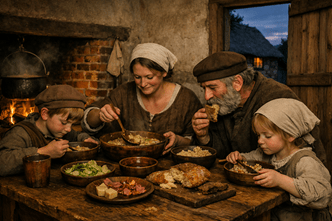
A humble Tudor village kitchen at dusk – a family sharing pottage and bread after a long day’s work, the firelight soft against plastered walls. This image is an artistic AI interpretation.
Rich Tudor Families
For the wealthy, dinner was a chance to show off. Their tables were filled with roasted meats, pies, fish, and dishes seasoned with expensive spices like cinnamon, saffron, and pepper. They enjoyed foods from faraway places – oranges, almonds, raisins – things poor families never saw. Rich households had large kitchens with spits for roasting, ovens for baking, and servants to prepare everything. Meals could last for hours, especially when guests visited. Children were expected to behave perfectly, using knives carefully and keeping their hands clean.
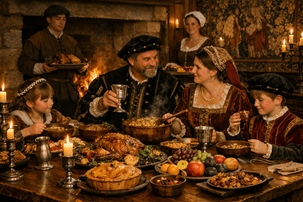
A grand Tudor dinner of roasted meats, pies, and fruits – a display of wealth and spice from distant lands, enjoyed beneath candlelight and carved oak beams. This image is an artistic AI interpretation.
Supper: Ending the Day
Poor Tudor Families
Supper for poor families was small and simple. It might be leftover pottage, a piece of bread, or a small bowl of vegetables. After a long day of work, families ate quickly and went to bed early. There were no desserts or sweet treats – sugar was far too expensive. In winter, when food was scarce, children often went to bed still a little hungry.
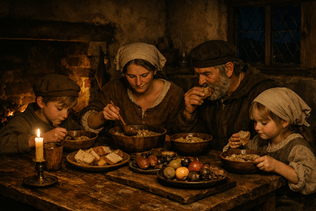
Evening in a Tudor cottage: leftovers warmed by the fire, a quiet end to a long day’s work. This image is an artistic AI interpretation.
Rich Tudor Families
Wealthy families enjoyed a lighter but still varied supper. They might have cold meats, cheese, fruit, or small pastries. Because they had well-stocked kitchens, they could eat whenever they wished. Candles lit the room, and supper felt calm and peaceful. Rich children sometimes had sweet treats made with honey or sugar – a luxury poor child rarely tasted.
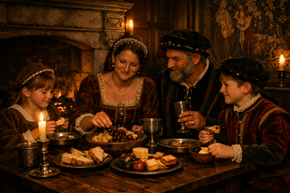
A Tudor family meal — simple food, shared moments, and warm candlelight. This image is an artistic AI interpretation.
What They Drank
Poor Tudor Families
Water wasn’t always safe to drink, so poor families often drank weak ale, even the children. It was very mild – more like flavoured water. Milk was only available if the family owned a cow or goat. Fruit juices didn’t exist, and tea hadn’t arrived in England yet.
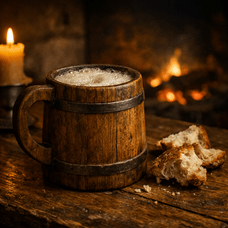
Small ale in a wooden mug — a humble, everyday drink brewed at home, safer than water and shared by all beneath the hearth’s glow. This image is an artistic AI interpretation.
Rich Tudor Families
The wealthy had many more choices. They drank wine, stronger ale, and spiced drinks called hippocras. They also had access to cleaner water from wells or springs. At feasts, they enjoyed colourful drinks made with herbs, honey, and spices.
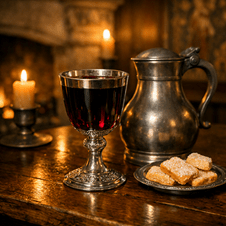
Deep red wine in silver — a mark of wealth and refinement, sipped by candlelight within carved oak and tapestry walls. This image is an artistic AI interpretation.
Feasts
Poor Tudor Families
Feasts were rare treats for poor families, usually tied to church festivals or community events. They might enjoy meat, cheese, or sweet bread on these special days. Children looked forward to feasts all year because it was their only chance to taste foods they normally couldn’t afford.
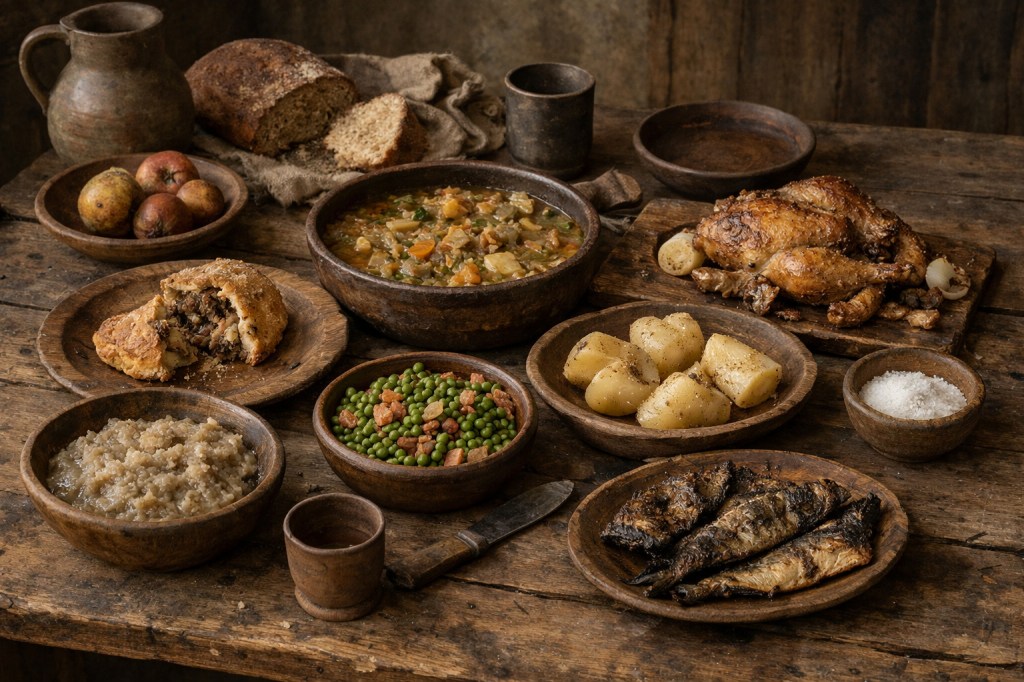
A simple Tudor feast – bread, pottage, and the everyday foods of ordinary families. This image is an artistic AI interpretation.
Rich Tudor Families
The rich held grand feasts filled with music, dancing, and enormous displays of food. They served swan, peacock, venison, and even sugar sculptures shaped like castles or animals. These feasts were meant to impress guests and show the family’s wealth. Children watched from the side, learning how to behave at important events.
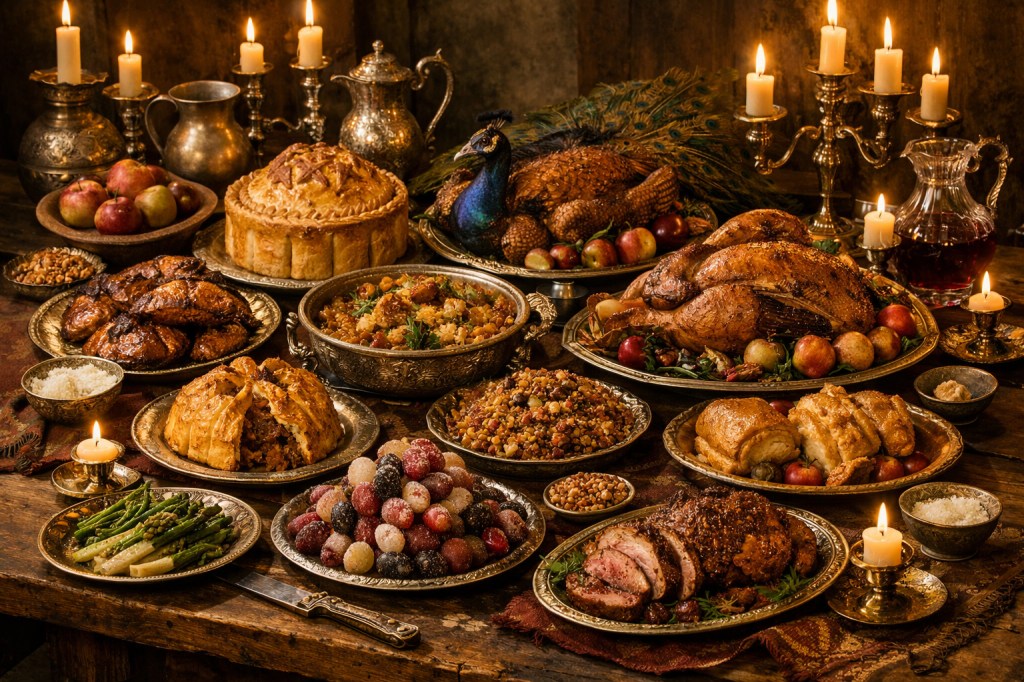
A lavish Tudor feast – rich foods, grand display, and the splendour of noble dining. This image is an artistic AI interpretation.
Table Manners
Poor Tudor Families
Poor families ate simply and practically. They used wooden bowls and spoons, and often shared dishes. There were no fancy rules – just eat what you’re given and don’t waste anything. Children learned to eat quickly before the food cooled.
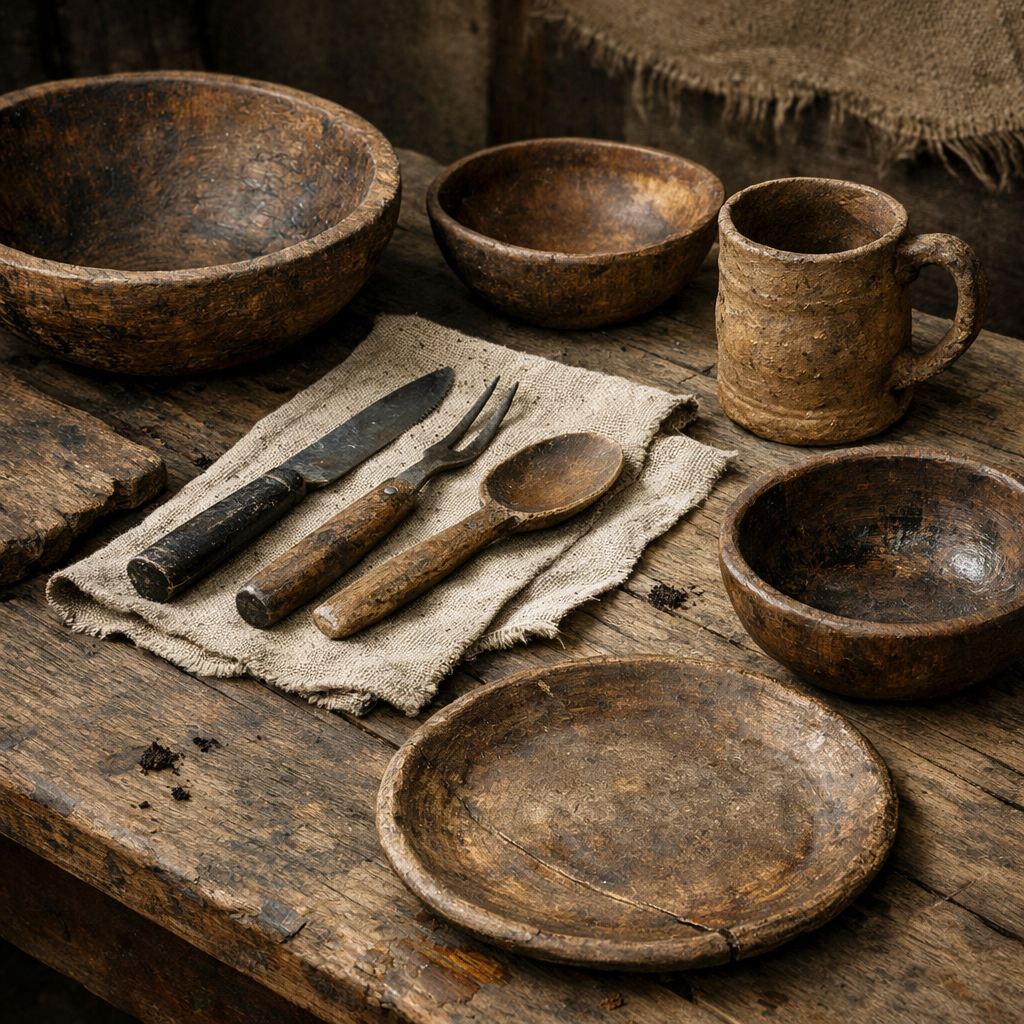
Simple wooden bowls and shared dishes — everyday table manners for poor Tudor families. This image is an artistic AI interpretation.
Rich Tudor Families
Rich families followed strict table manners. They used knives carefully, kept their hands clean, and never reached across the table. Servants carved the meat, and children were taught to speak politely and wait their turn. Eating was not just about food – it was about showing good behaviour.
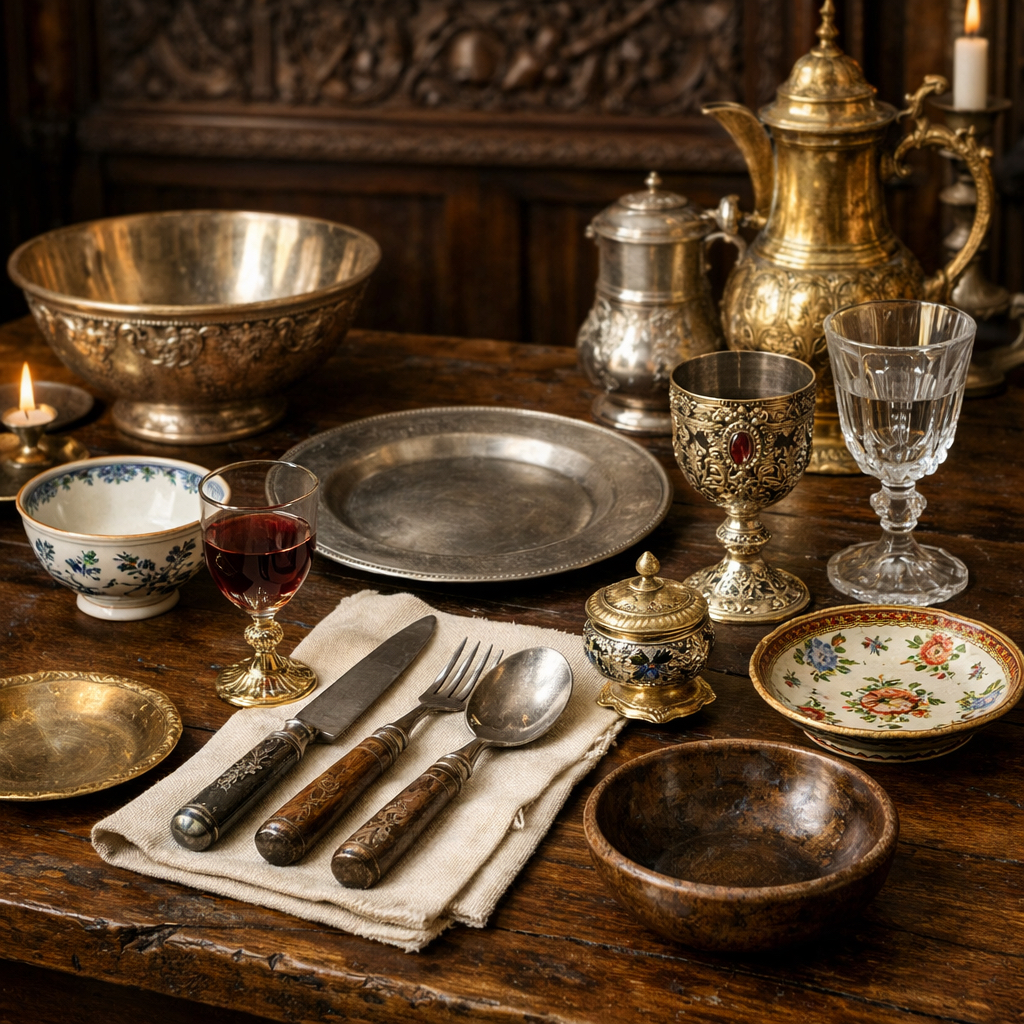
Elegant tableware and formal manners — the refined dining world of rich Tudor families. This image is an artistic AI interpretation.
Tudor Children
Tudor children, rich or poor, usually ate smaller versions of adult meals. Poor children ate pottage, bread, and vegetables. Rich children enjoyed meat, cheese, fruit, and sometimes sweet treats. There were no special “kid’s meals” – children were expected to eat what the adults ate.
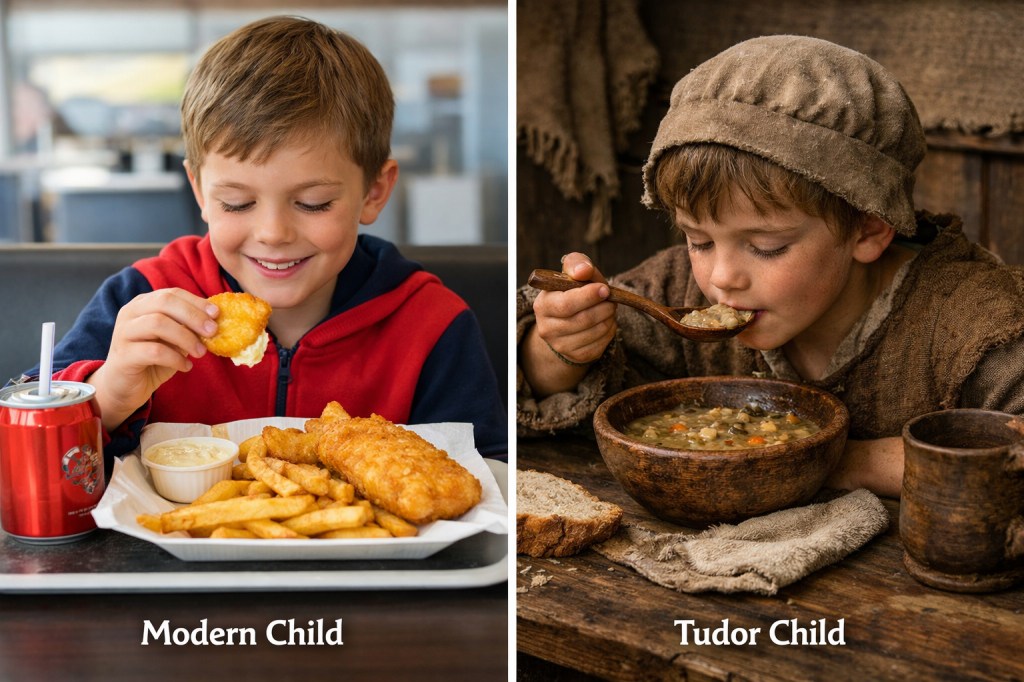
Modern meals vs Tudor meals — two very different plates for two very different childhoods. This image is an artistic AI interpretation.
Foods the Tudors Didn’t Have
- Potatoes
- Tomatoes
- Chocolate
- Bananas
- Pasta
- Crisps
- Pizza
- Fizzy drinks
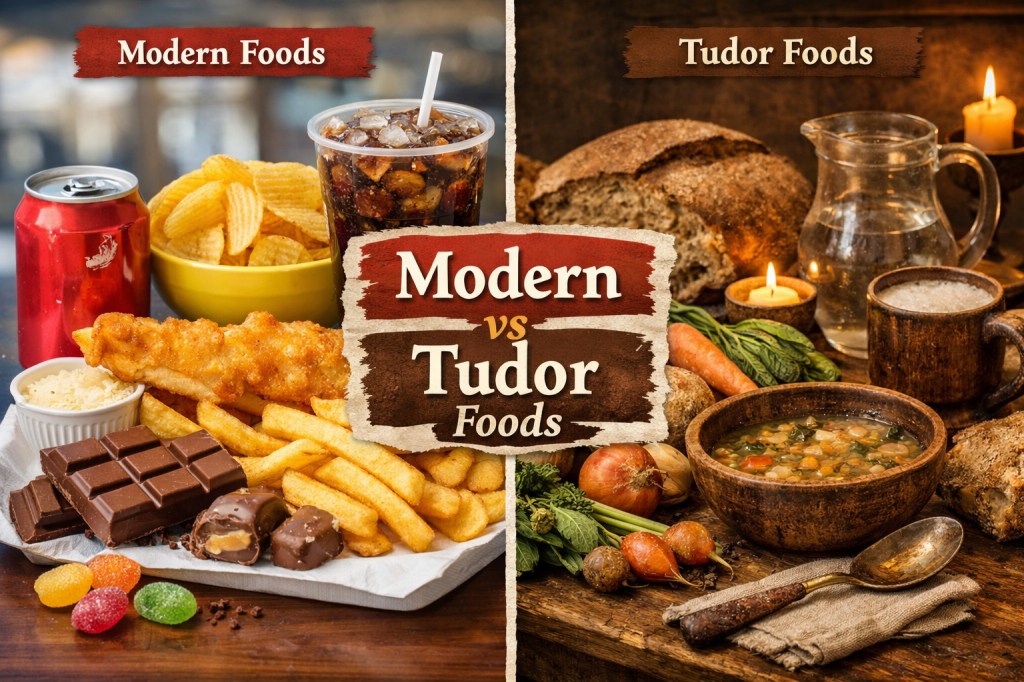
Modern snacks vs Tudor staples — two completely different diets. This image is an artistic AI interpretation.
These foods arrived in England much later. Tudor meals were very different from what we eat today.
Food in Tudor England tells us so much about daily life – the warmth of a cottage kitchen, the noise of a manor feast, and the quiet moments families shared at the end of the day. Whether simple or grand, every meal carried a story.
What part of Tudor food would you most like to try – and what would you rather avoid?


Leave a comment