
Leaving Childhood Behind
Morning light shines through the small windows of a Tudor workshop, catching dust that floats above a wooden bench. A boy works carefully beside his master, learning the craft that will shape his future. Across the courtyard, a young girl smooths linen and practises her curtsy, preparing for a life of service. In Tudor times, growing up meant learning duty – through work, manners, and faith – until childhood quietly gave way to adulthood.
For Tudor children, the path to adulthood looked very different depending on their family’s wealth. Noble boys might become pages in great houses, learning manners, music, and the art of conversation. Girls were taught to sew, read, and serve at court. Poorer children often became apprentices, working long hours to learn a trade such as weaving, carpentry, or baking. Each role carried pride and purpose – a way to grow into the world through skill and service.
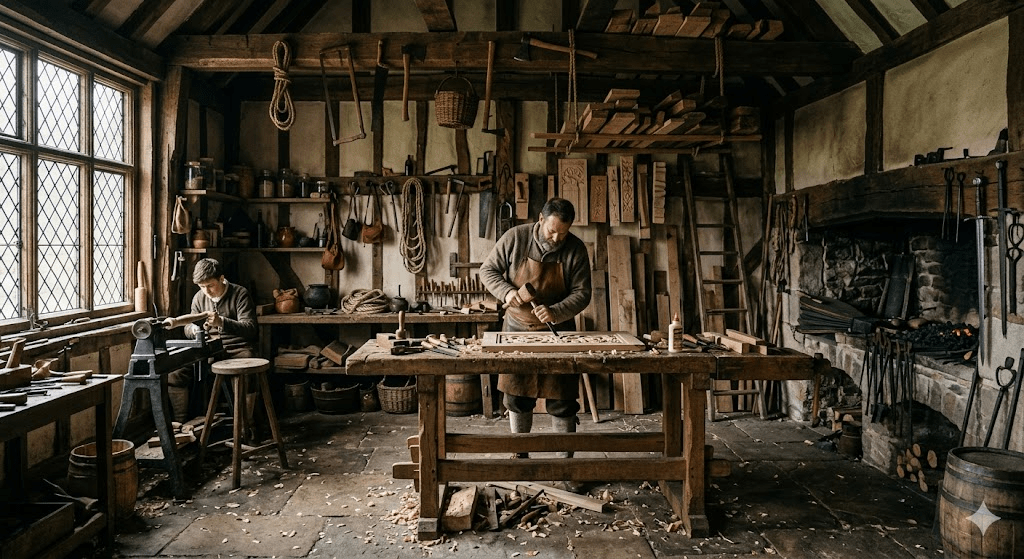
Step into the 16th Century: A glimpse inside a bustling Tudor workshop, where craftsmanship was a slow, deliberate art.
Manners and Courtly Behaviour
Good manners were highly valued in Tudor England. Noble children learned how to bow, dance, and speak politely, often practising in great halls or gardens. They were taught to show respect to elders and to move with grace, as every gesture reflected their family’s honour. In simpler homes, children learned kindness, honesty, and hard work – lessons that mattered just as much. Whether in a palace or a cottage, manners shaped how a young Tudor found their place in the world.
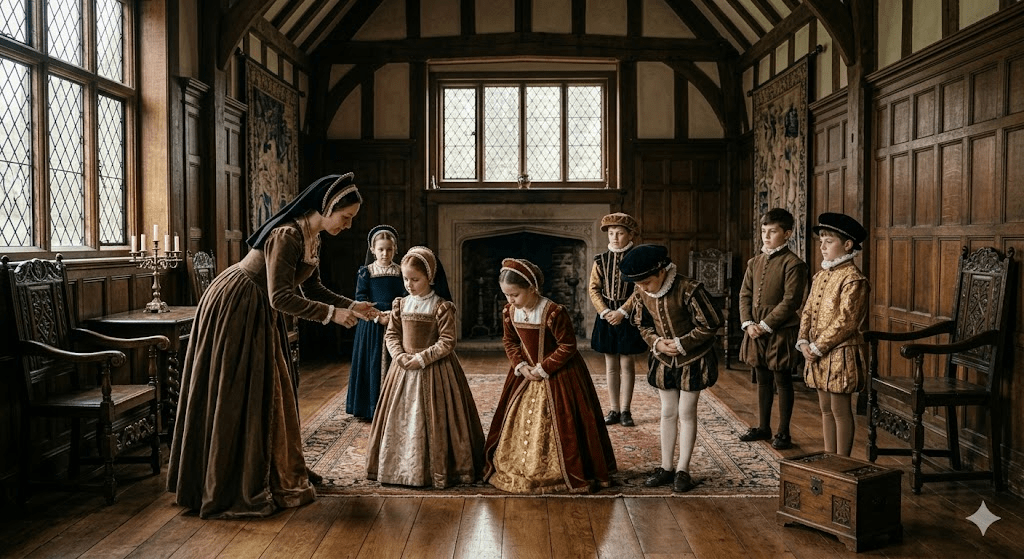
A 16th-century school.
The Path to Adulthood
As Tudor children grew older, their work and lessons slowly shaped who they would become. Finishing an apprenticeship or entering service marked the start of adult life. Some married young, while others continued to serve in noble households or run small workshops of their own. Faith guided many choices, reminding them that every task – from sweeping a floor to writing a letter – could honour God. For Tudor people, adulthood was not just an age but a calling, built on patience, skill, and devotion.

Fun Historical Fact: In Tudor times, poor men like this were often required by law to wear a wool “statute cap” on Sundays and holidays to help support the domestic wool industry!
Reflection
Growing up in Tudor England meant learning to serve, to work, and to live with purpose. Each child’s path – whether through noble halls or busy workshops – was shaped by patience and faith. Today, growing up still asks for the same quiet courage: to learn, to care, and to find meaning in the tasks before us. Perhaps the Tudor world reminds us that adulthood is not only about age, but about the heart we bring to our daily work.

How do you think growing up today compares to life in Tudor times?
If you had lived in Tudor England, which path would you have chosen – the court, the workshop, or the home?
 History by Candlelight
Leave a comment