In Tudor England, childhood looked very different depending on where you were born. A poor child might wake on a straw – stuffed mattress beside the dying glow of the hearth, already thinking of the morning’s chores. A rich child, meanwhile, would open their eyes beneath carved wooden bedposts, greeted by warm water, soft linen, and the quiet footsteps of servants. Though they lived in the same country, breathed the same smoky air, and prayed the same prayers, their days unfolded like two separate worlds – one shaped by labour and survival, the other by learning, privilege, and expectation. Today, we’ll walk through both lives side by side, from dawn to dusk, to see just how differently a Tudor day could begin… and how differently it could end.
Dawn: Two Children Wake in Two Different Worlds
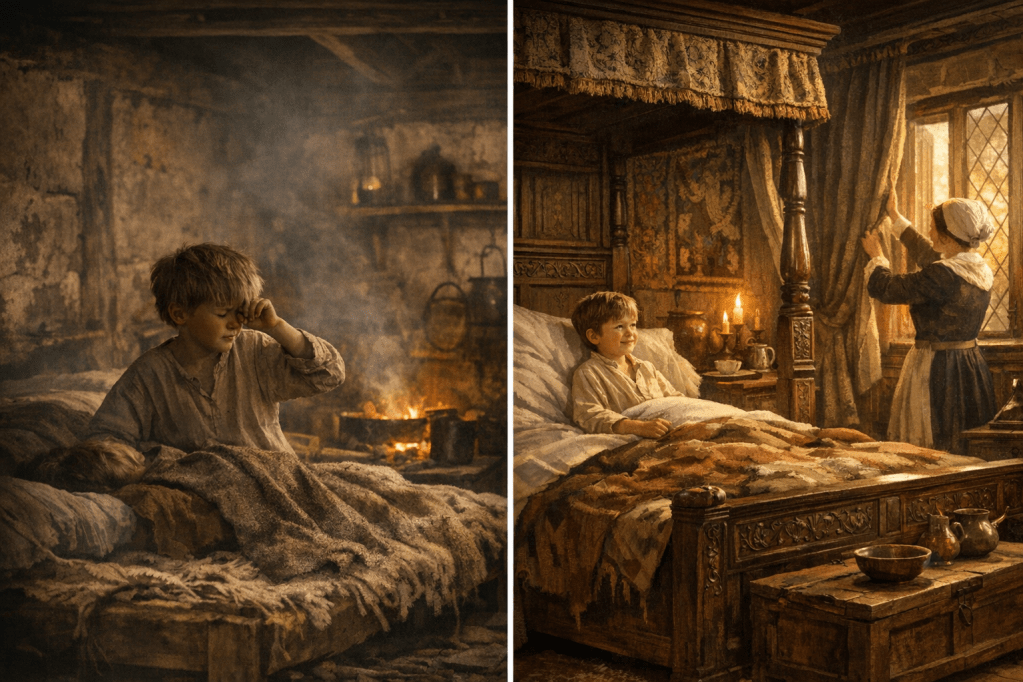
In Tudor England, the way a child began their day depended heavily on their family’s status. Poor children usually woke early on straw bedding, often sharing space with siblings in a small, smoky cottage. Their mornings started with practical tasks that supported the household. Wealthier children, by contrast, woke in warmer, more comfortable rooms, often with servants nearby. Their mornings were structured around preparation, learning, and the expectations of their social class.
Breakfast: Simple Survival vs Comfortable Abundance
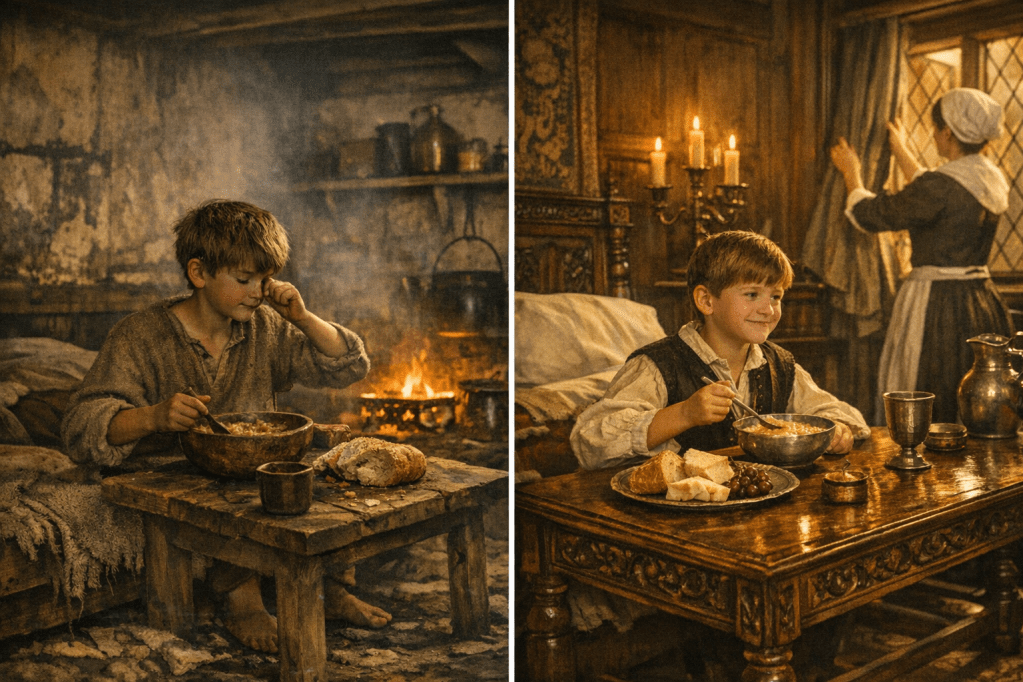
Breakfast for a poor Tudor child was plain and practical — usually leftover pottage or coarse bread, eaten quickly before the day’s work began. Food was limited, and every meal mattered. Wealthy children, however, enjoyed a more varied and plentiful breakfast. They might have soft bread, cheese, sweetened porridge, or even small amounts of meat, served in a warm room and eaten without the pressure of chores waiting outside the door.
Midday: A Quick Bite vs a Leisurely Meal
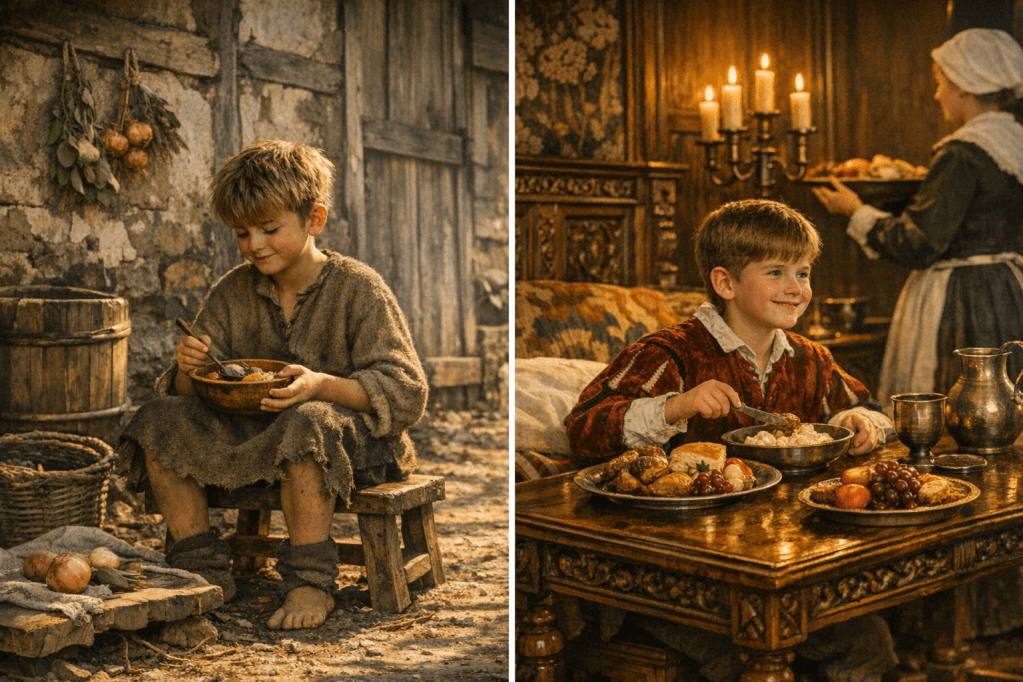
Midday meals for poor families were simple and often eaten on the go — bread, onions, and seasonal vegetables, with little time to rest. Wealthy children enjoyed larger meals served on pewter or wooden dishes, often including meat, cheese, and fruit. After eating, they usually had a short period of leisure before returning to their lessons.
Afternoon: Hard Work or Gentle Recreation
Afternoons for poor children meant more work: gathering firewood, helping in the fields, running errands, or caring for younger siblings. Their days were shaped by necessity and survival. Wealthy children spent their afternoons practising skills considered important for noble life — riding, dancing, embroidery, reading, or playing games in the manor grounds.
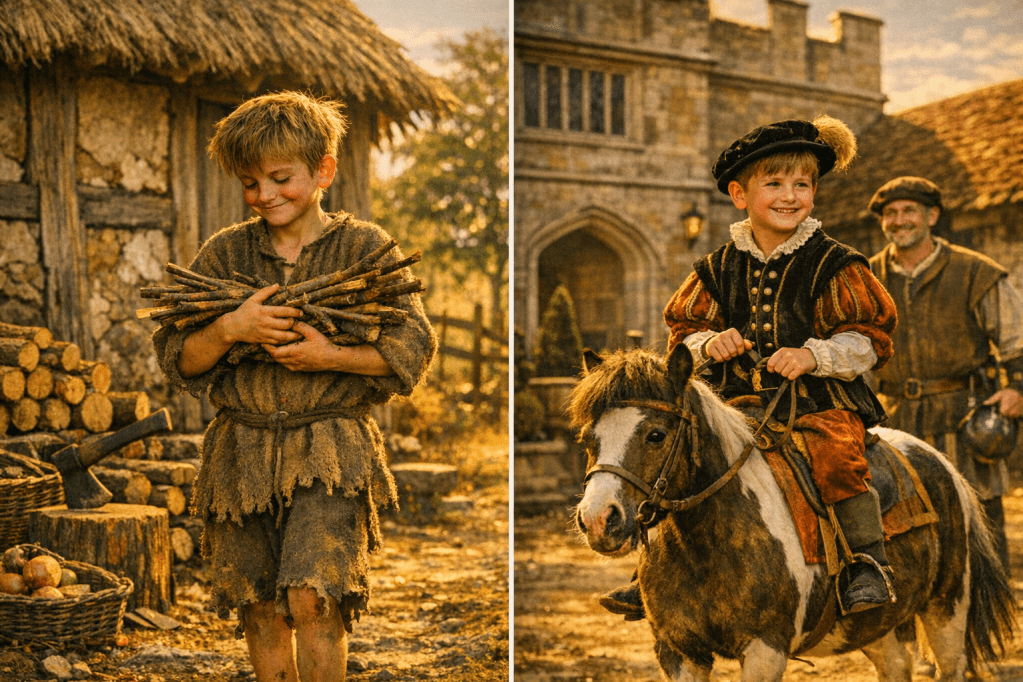
Evening: Hearthside Quiet vs Hallside Comfort
Evenings in poor households were quiet and centred around the hearth. Supper was simple, and families gathered close for warmth, sharing stories or songs before bed. Wealthy children ate in larger, warmer rooms, often with entertainment such as music or readings. Their evenings were more structured and comfortable, reflecting the resources of their household.
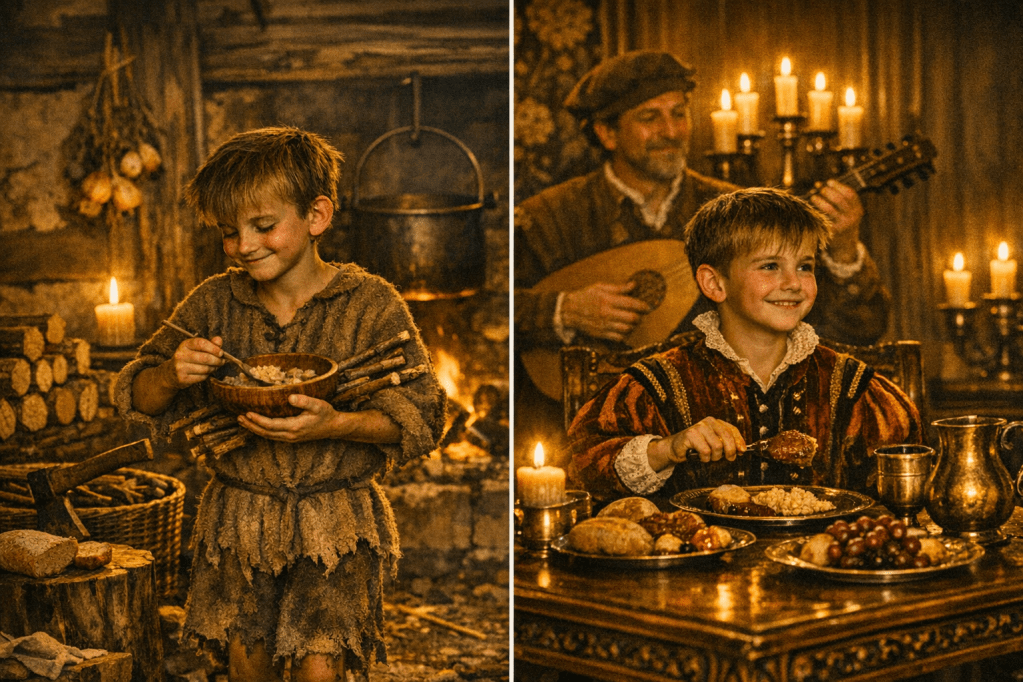
Nightfall: Straw Bedding and Prayers vs Feather Mattresses and Warmth
Poor children ended their day on straw bedding, wrapped in coarse blankets, with the cottage door barred for safety. The room was often cold, lit only by the fading glow of the hearth. Wealthy children slept in feather‑filled beds with soft linen, surrounded by tapestries that helped keep the room warm. Their nights were quieter and more secure, supported by the comforts of their status.
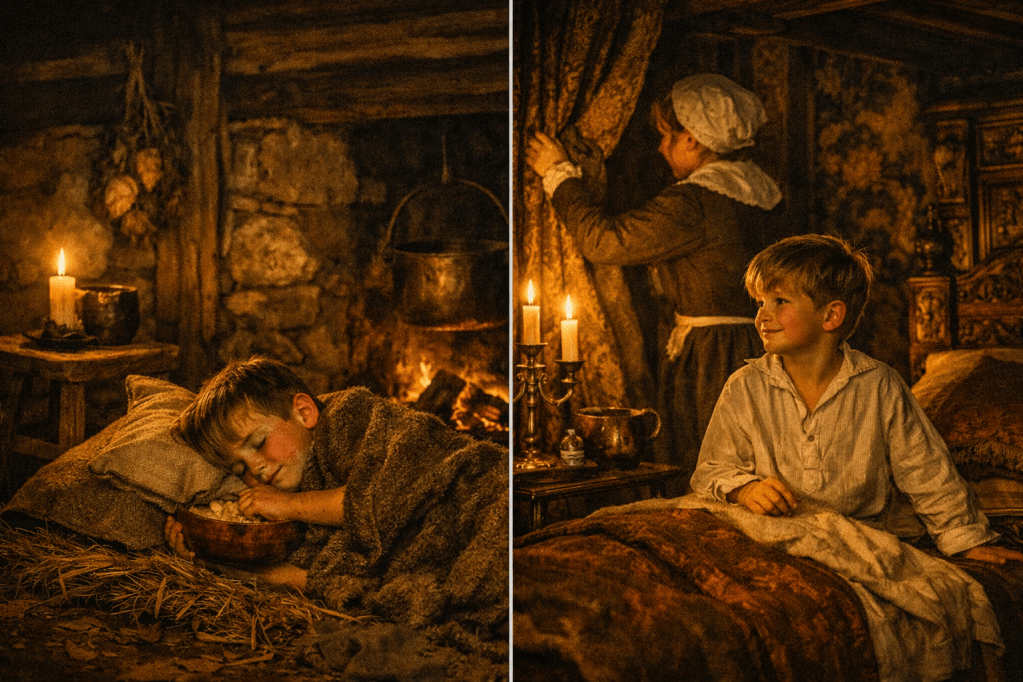
Looking at these two two Tudor childhoods side by side, it’s striking how differently life could begin depending on the family you were born into.
 History by Candlelight
Leave a comment